Fastener Replacement
Screws with cracked or flattened washers come out and larger-diameter screws go back in, driven with a clutch so the washer seals without crushing. Stripped or empty holes are filled or patched.

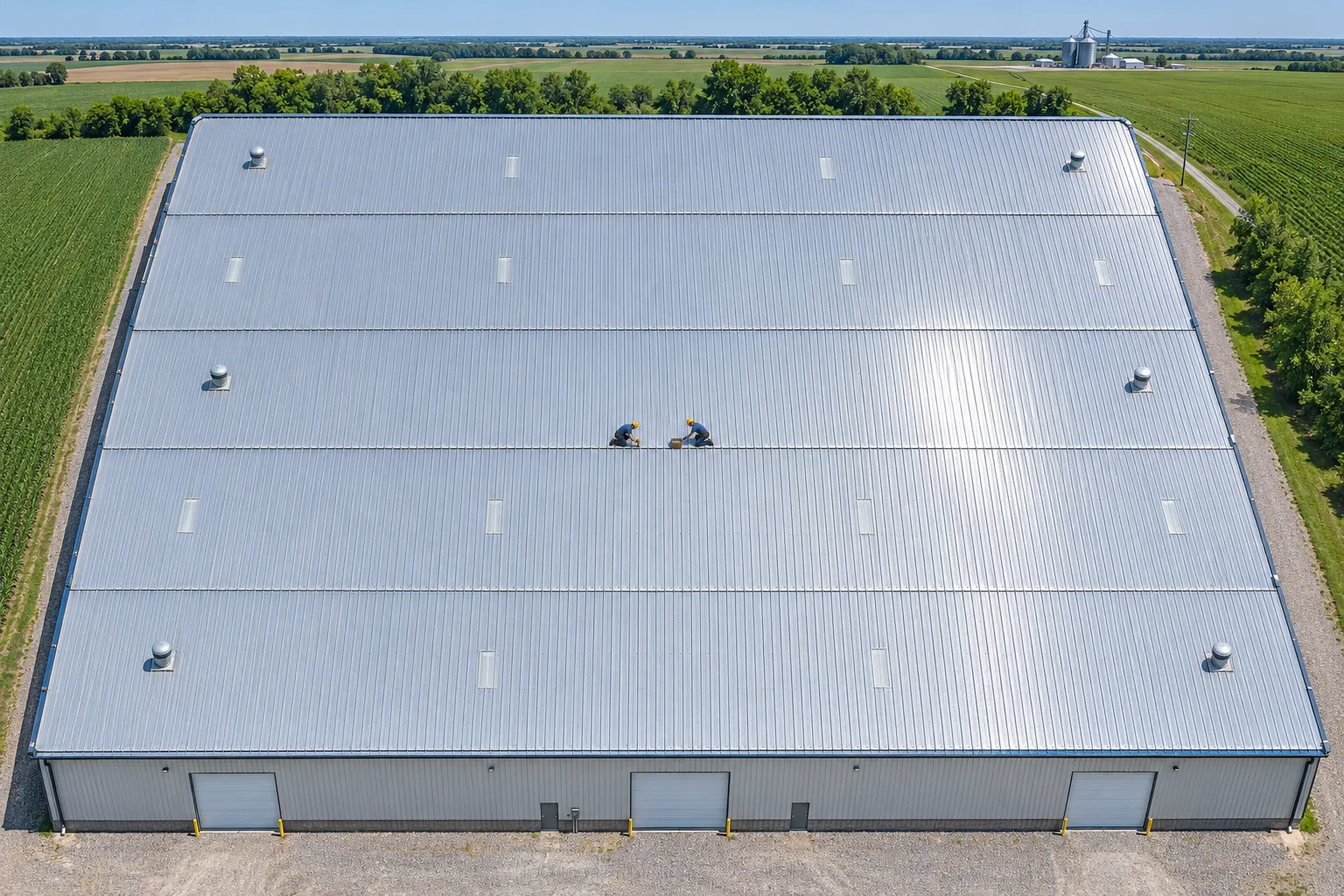
As an Owensboro commercial metal roof repair contractor, we replace backed-out screws, seal end laps, refasten trim, and swap rusted-through panels on shops, warehouses, and plants.
Every screw line checked along the purlins, with new washers where cracked.
Compare all repair typesSealant, butyl tape, and stitch screws close joints that carry water.
Trace an active leakSeams resealed, hangers refastened, and eave trim reset over the gutter.
Read metal roof answersAn Owensboro commercial metal roof repair contractor judges a panel by whether the steel still holds a screw. Here is how each condition sorts out.
| Condition | Repair Fits | Plan For More |
|---|---|---|
| Light surface rust | Wire brush and rust primer | Rust returning across most panels |
| Rust at laps and screw heads | Clean, prime, and seal the laps | Laps rusted through along whole runs |
| Pinholes in a small area | Metal patch with sealant and fasteners | Holes spread across many sheets |
| Holes across one panel | New panel matched to the profile | Damaged purlins under the rusted panels |
| Loose screws | Larger-diameter screws with new washers | Panels torn at fastener holes by wind |
Matching an older panel profile can take a custom order, so rib spacing and panel width are measured on the first visit.
Metal roofs show trouble at the joints first, and most of it is visible without climbing up.
Rust trails running down from fastener rows mean washers have dried and water is reaching the steel.
Trim flapping or bent after a storm leaves panel ends open to wind-driven rain.
Water reaching a screw shank follows the purlin and drops several feet from the hole.
Damp patches under panels on cold mornings can be condensation, which gets separated from true leaks before any repair.
Lap joints on the windward slope pull apart first and let water run uphill under the panel.
Crushed washers split and leak just like loose ones, so torque matters as much as tightness.
Hail and foot traffic break plastic skylight panels, and their curb seals dry out over time.
Most metal roof repairs focus on fasteners, laps, trim, and flashing, since those joints move and loosen while the panels themselves hold up longer.
Screws with cracked or flattened washers come out and larger-diameter screws go back in, driven with a clutch so the washer seals without crushing. Stripped or empty holes are filled or patched.
End laps get sealant between panels, new stitch screws, and reinforced tape over the joint. Side laps are cleaned and resealed where water has started to track.
Rusted-through sheets are replaced with panels matched to the profile. Ridge caps get new closures, and rake and eave trim are refastened so water drops into the gutter.
Gutter seams are resealed and hangers refastened. Pipe boots and curb flashing get replaced, and built-in gutters behind parapets are checked closely for standing water.
Tight fasteners and sealed laps protect whatever sits under a metal roof.
Call with the slope and panel run where you see raised screws or bent trim. Photos from the ground help plan the visit.
Metal repairs follow the screw rows and laps in order, so no part of the roof is skipped.
We walk every screw row along the purlins, check end laps, ridge caps, and trim, and look at skylights and gutters for standing water and rust.
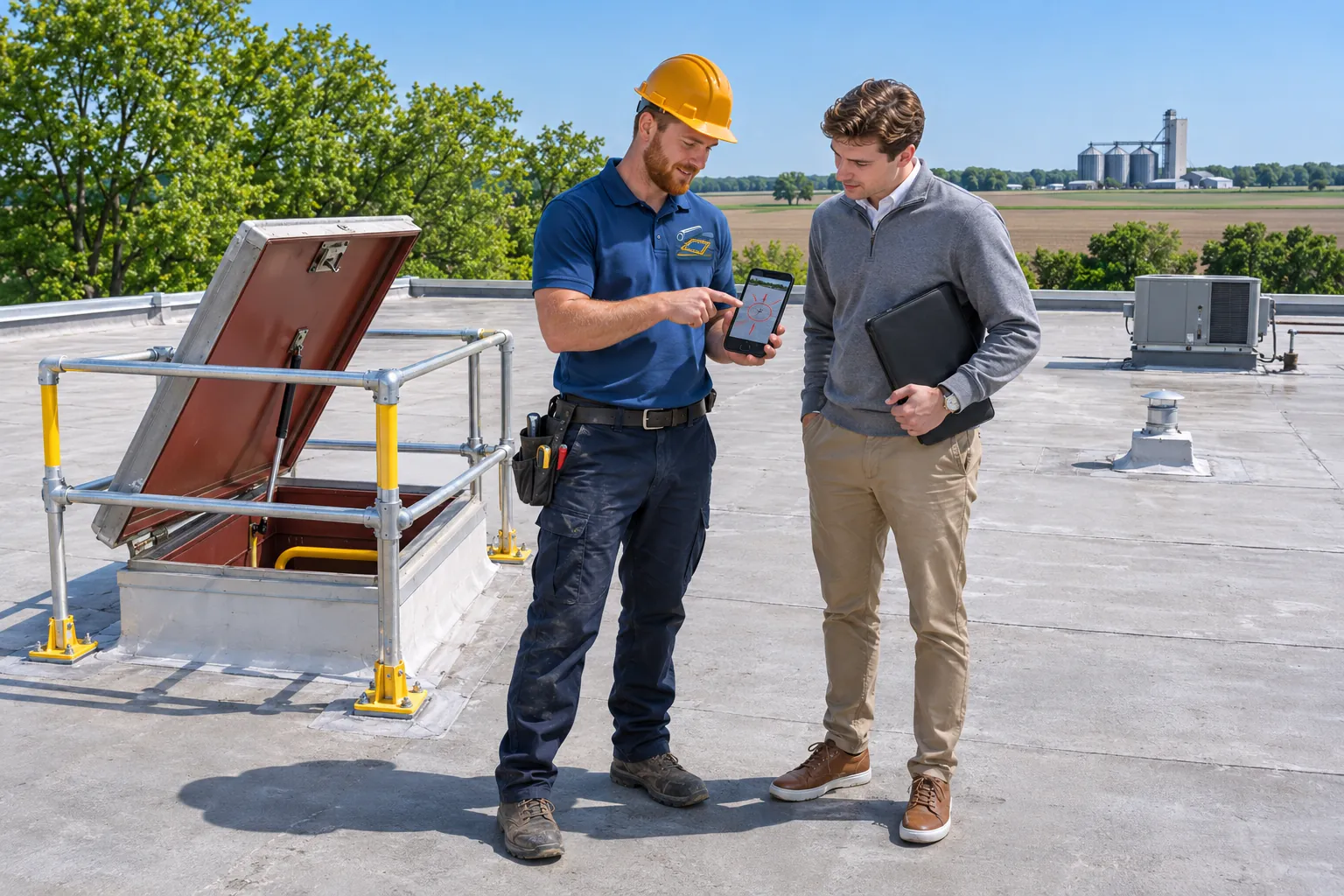
Drips on cold mornings get checked against rain history before any panel is opened, since condensation needs a different fix than a failed joint.
Backed-out and overdriven screws come out. New screws one size larger go in with fresh washers, set at a consistent torque.
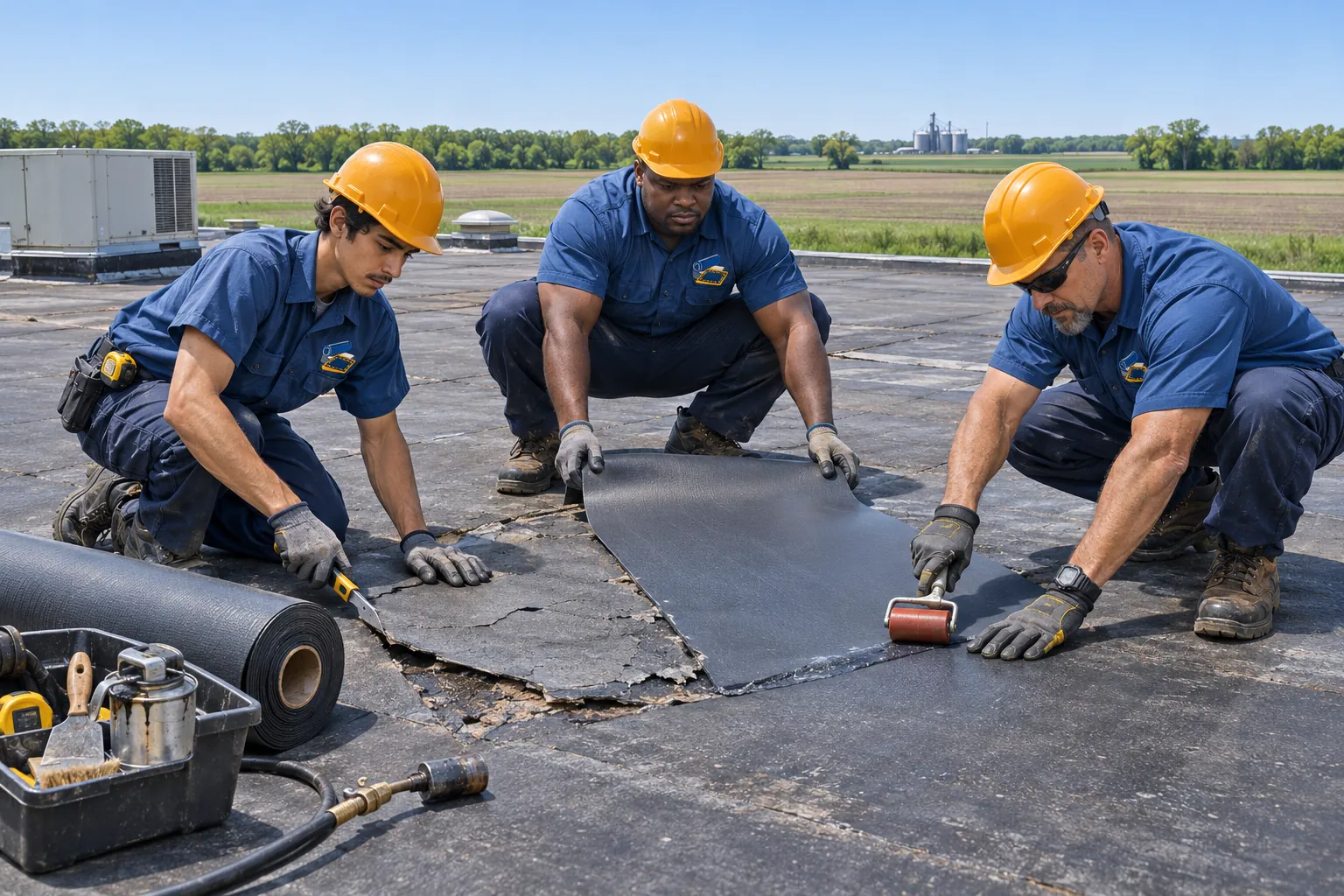
End laps get sealant and stitch screws, ridge caps get new closures, and trim is refastened so water sheds into the gutter.
Panels rusted through are replaced with sheets matched to the profile, then the roof is checked and photographed panel by panel.
Metal buildings rarely stand alone. These repairs often come up on the same property.
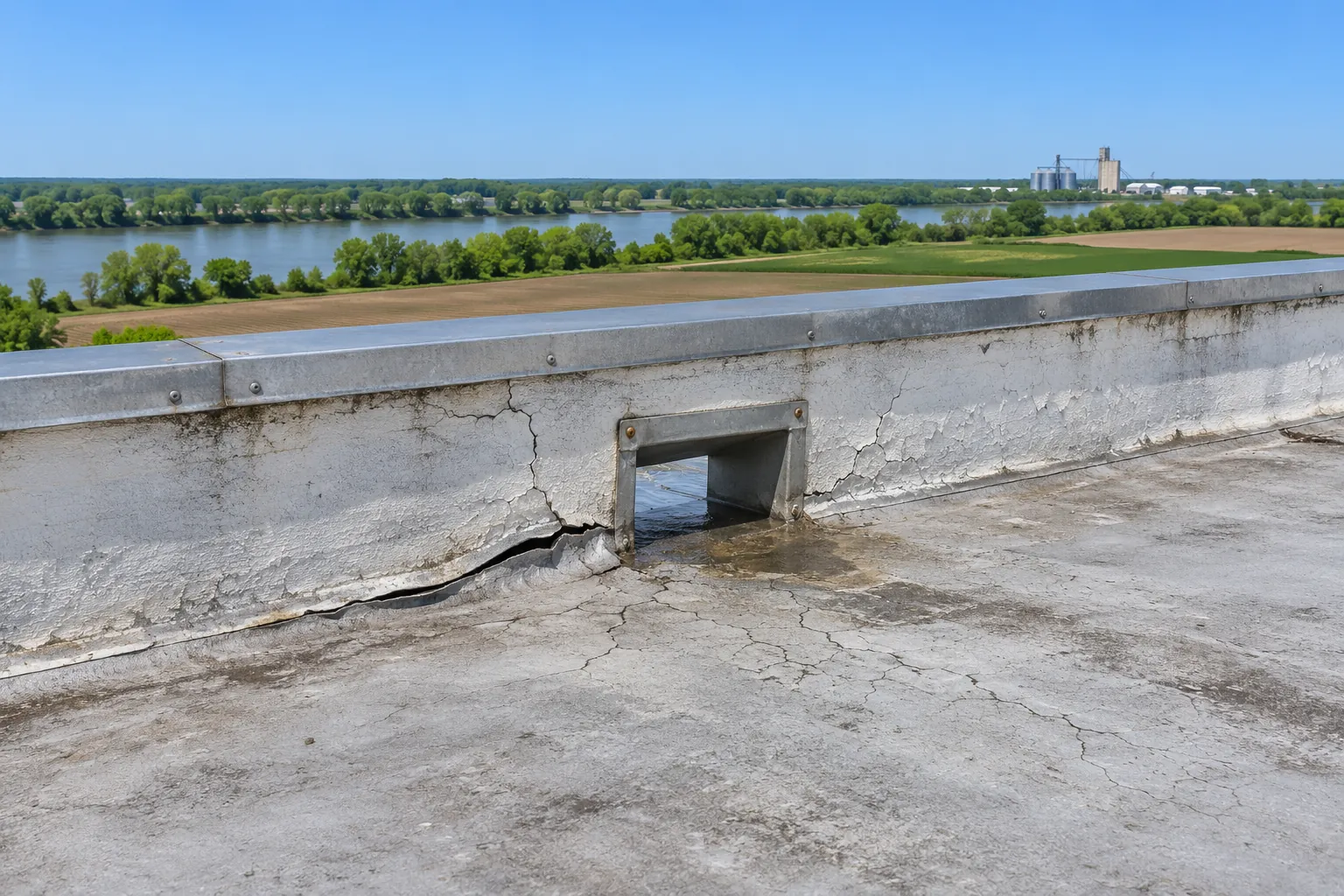
Metal shops with a low-slope office or loading dock roof need membrane seam and drain repairs too.
Flat roof repair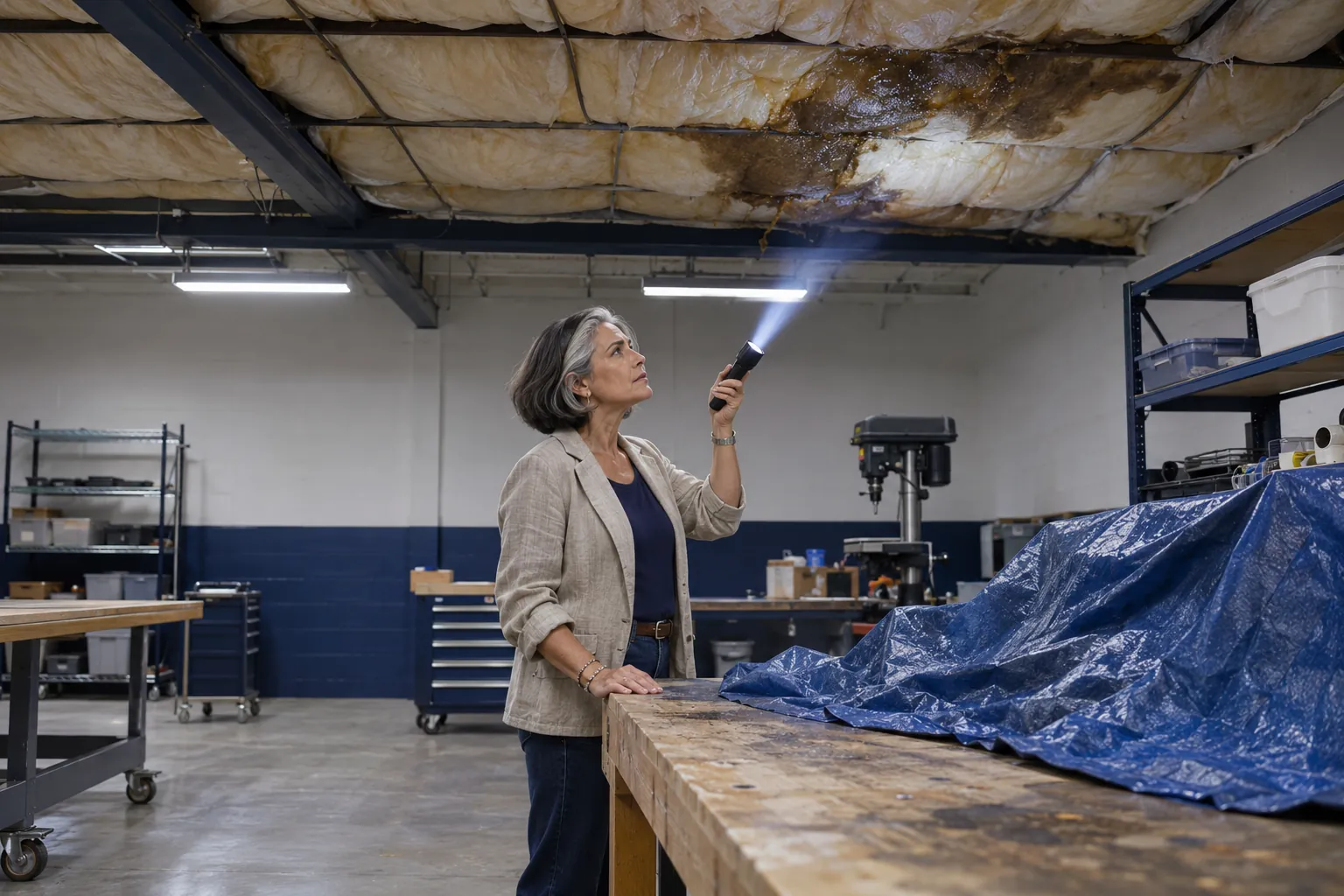
Stains that move with the wind direction point to an end lap or ridge, and tracing confirms which one.
Roof leak repair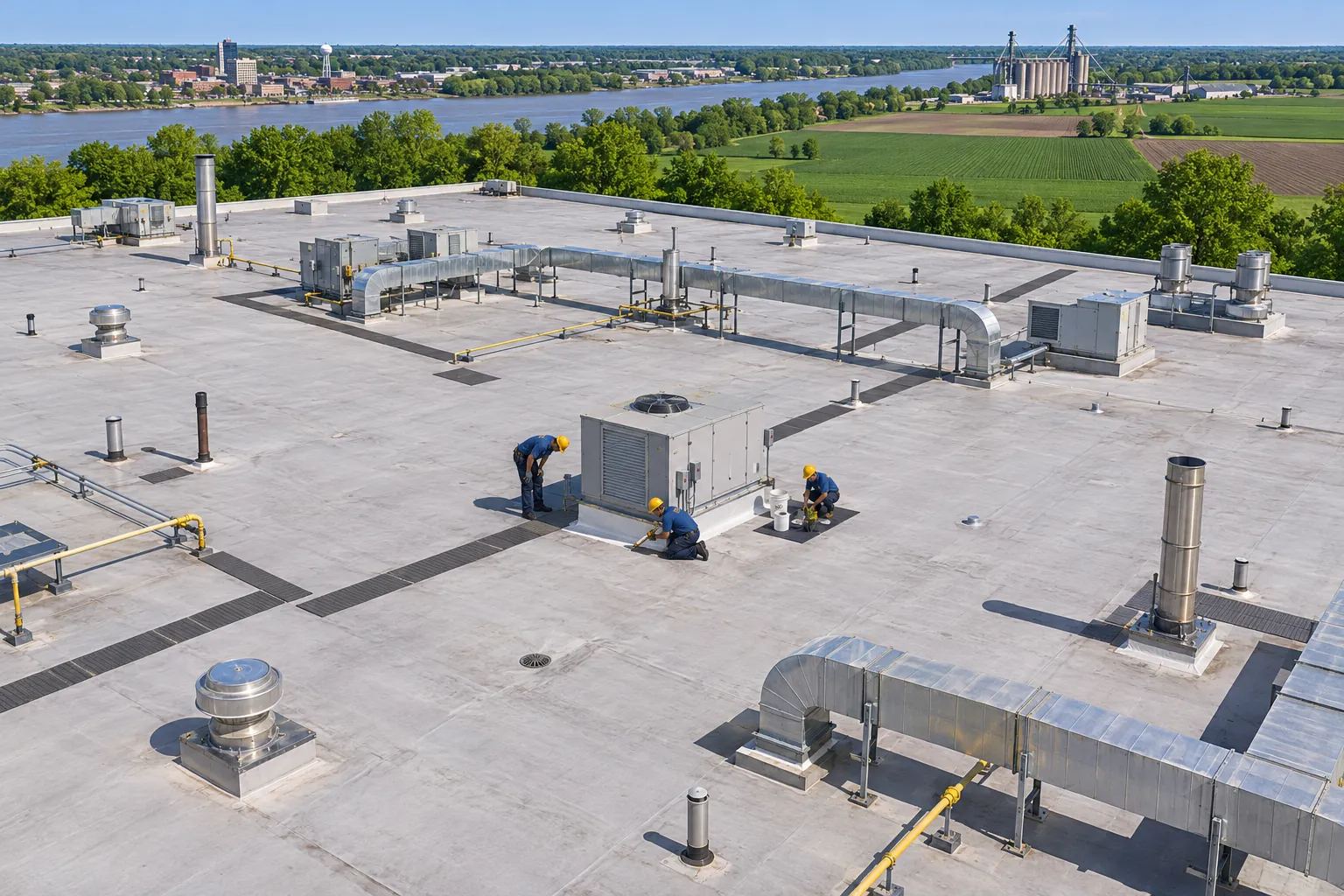
Plants with metal roofs over production lines add exhaust fans, stacks, and pipe supports to the repair list.
Industrial roof repairAnswers on screws, rust, laps, and storm checks for panel roofs.
Fasteners
Backed-out screws are tightened or replaced with a larger-diameter screw and a new washer so the hole seals again. Heat movement and wind push screws up over the years until water runs down the shank. Torque is set with a clutch, because a crushed washer splits and leaks too.
Fasteners, laps, trim, and flashing account for most of the work: backed-out screws and cracked washers, side and end laps, ridge caps and rake trim, rusted-through panels, pipe boots and curbs, and gutter seams. On R-panel buildings, a fastener check across the whole roof finds problems early.
Rust
By whether the steel still holds a screw. Surface rust is wire-brushed and primed, rust at laps and screw heads is cleaned and sealed, pinholes get a metal patch, and holes across a panel mean a new sheet matched to the profile. Eaves and end laps rust first because water and debris sit there longest.
The joint is cleaned, sealant or butyl tape is added, and the metal is refastened so it stays closed. End laps get stitch screws and reinforced tape, ridge caps new closures, gutters resealed seams and refastened hangers, and eave trim is reset so water drops into the gutter.
Storm Damage
The crew walks the panels for dents at seams, lifted trim, missing screws along edges, cracked skylight panels, opened end laps on the windward slope, and dented vents. Shallow dents in a flat panel are usually cosmetic, while bent laps and torn closures let water in. Dated photos go to the owner for the insurance carrier.
Yes. Warm, damp air inside meets cold panels and drips on cool mornings even when every joint is tight. Drips that show up without rain point that way, so the crew checks timing against the weather before opening any lap.
Tell us the building's use, the slope where leaks show up, and whether screws look raised from the ground.
Leave a name and number and we will call you about the leak or damage you are seeing.
Or call now: (270) 260-2459