Residue-Resistant Patches
Membrane near grease fans is cleaned with a cleaner its maker approves, softened sheet is cut out, and PVC goes in where grease and oil sit. A small test patch shows whether the surface holds.

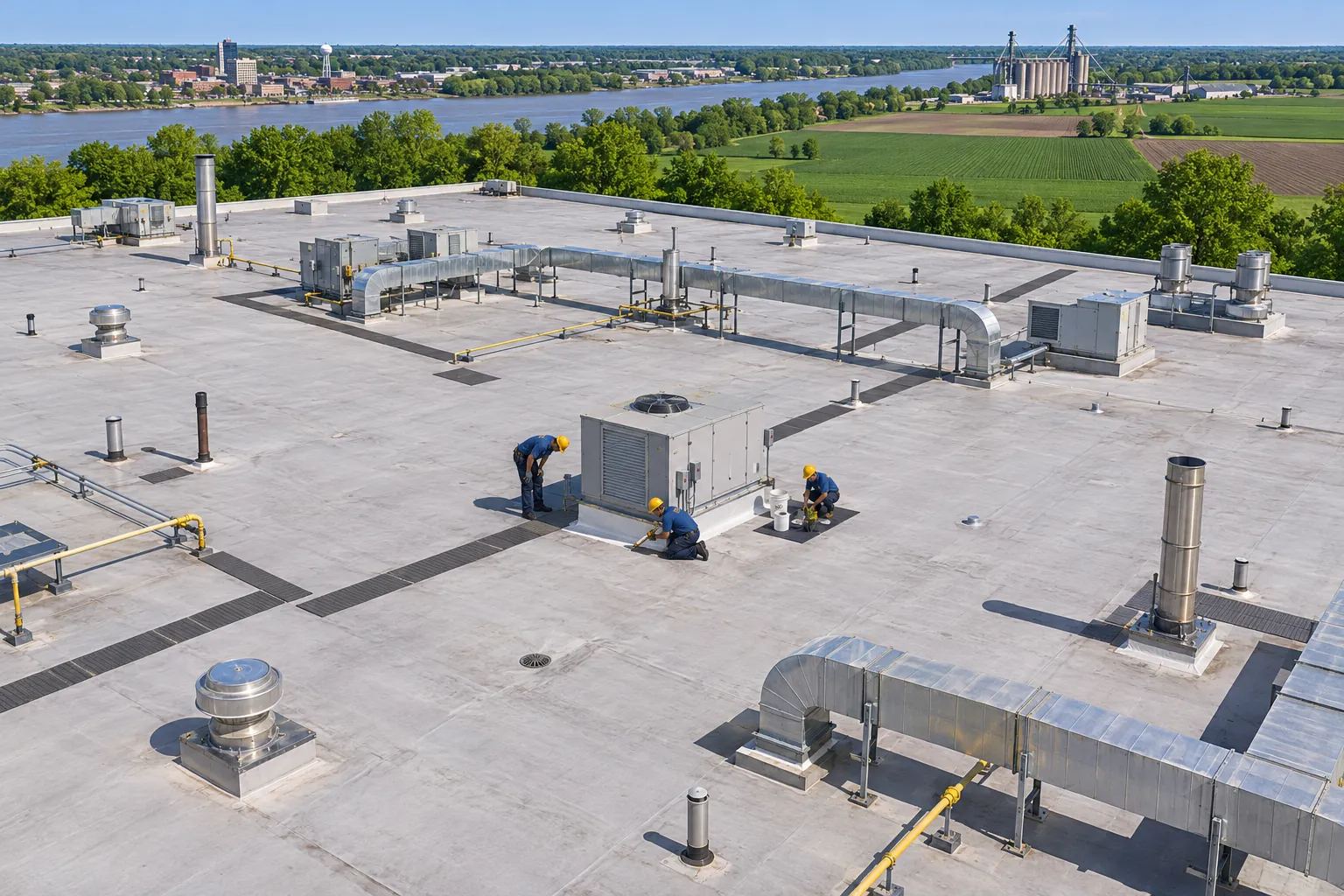
As an Owensboro industrial roof repair contractor, we fix plant roofs around exhaust fans, stacks, process vents, and pipe supports, with repairs planned around production and safety rules.
Residue cleaned and heat-rated collars set at hot stacks.
Compare all repair typesRusted deck cut back to solid steel, then plated or replaced.
Trace a plant leakLarger repairs phased by bay so production stays covered.
Industrial roof answersAn Owensboro industrial roof repair contractor looks at what runs under the roof as closely as the roof itself. These factors decide how the repair is staged.
| Factor | Repair In One Visit | Phased Or Bigger Job |
|---|---|---|
| Location | Over storage or a quiet bay | Over a production line or electrical room |
| Surface | Clean membrane that holds a patch | Grease or chemical residue that blocks adhesion |
| Heat | Normal roof temperatures | Softened membrane near hot stacks |
| Deck | Solid under the leak | Rust holes or thinning steel over a wide area |
| Access | Hatch or ladder open to the crew | Escorts, lockouts, and hot-work permits needed |
Plant roofs wear faster around equipment, and these signs show up first.
Dark streaks under exhaust fans mean grease or process mist is settling on the roof membrane.
Plant dust packed into scuppers backs water up behind parapets.
Water on production equipment traces back to a curb, vent, or pipe support upslope.
Orange flakes falling from the underside point to steel rusting from the top.
Sheet that feels soft or bubbled near a fan has been broken down by oil or chemicals.
Pipe supports resting straight on the membrane wear through it as lines expand and shift.
Flashing around hot stacks that has softened or cracked needs high-temperature collars.
Industrial repairs pair each patch with the exposure it faces, from heat and grease to heavy foot traffic.
Membrane near grease fans is cleaned with a cleaner its maker approves, softened sheet is cut out, and PVC goes in where grease and oil sit. A small test patch shows whether the surface holds.
High-temperature flashing collars replace cracked or softened flashing at hot stacks, kept clear of materials that soften in heat.
Insulation and membrane are cut back to solid edges, small holes get a welded or screwed plate, and full deck sections are replaced where rust has spread. Engineers review large deck replacements.
Walkway pads run to each piece of equipment, pipe supports are set on pads, and grease containment boxes go under kitchen and process exhaust fans.
Repairs timed with plant maintenance protect the roof and the work under it.
Call with the bay, the equipment under the drip, and any shutdown windows coming up. We plan the repair around them.
Plant repairs add safety and scheduling steps to the usual leak work.
We walk the roof with plant staff, check drains, seams, and flashing at every fan and stack, and note residue, supports, and soft spots by roof area.

Lockouts for exhaust fans, hot-work permits, fire watch, and escorts are arranged with the safety office before anyone cuts into the roof.
Intakes near the repair are covered or shut down, interior protection goes under deck openings, and work is timed around shift changes.
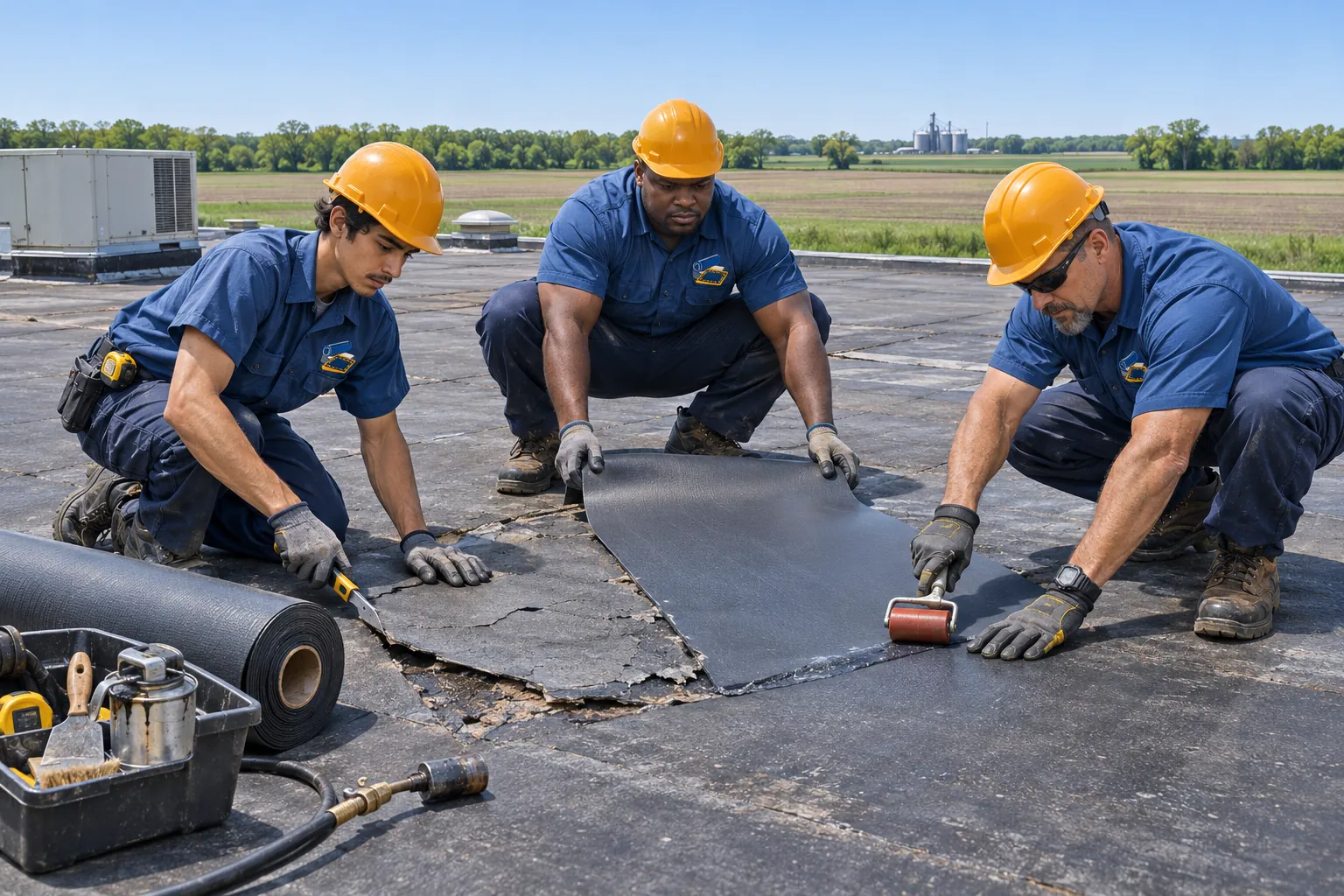
Small leaks are patched in one visit. Larger deck and membrane repairs are phased bay by bay so production areas stay covered.
Spring and fall checks after the repair catch winter damage and summer heat stress, and each finding is logged for the next shutdown.
Plant campuses carry more than one roof type, and each needs its own repair method.
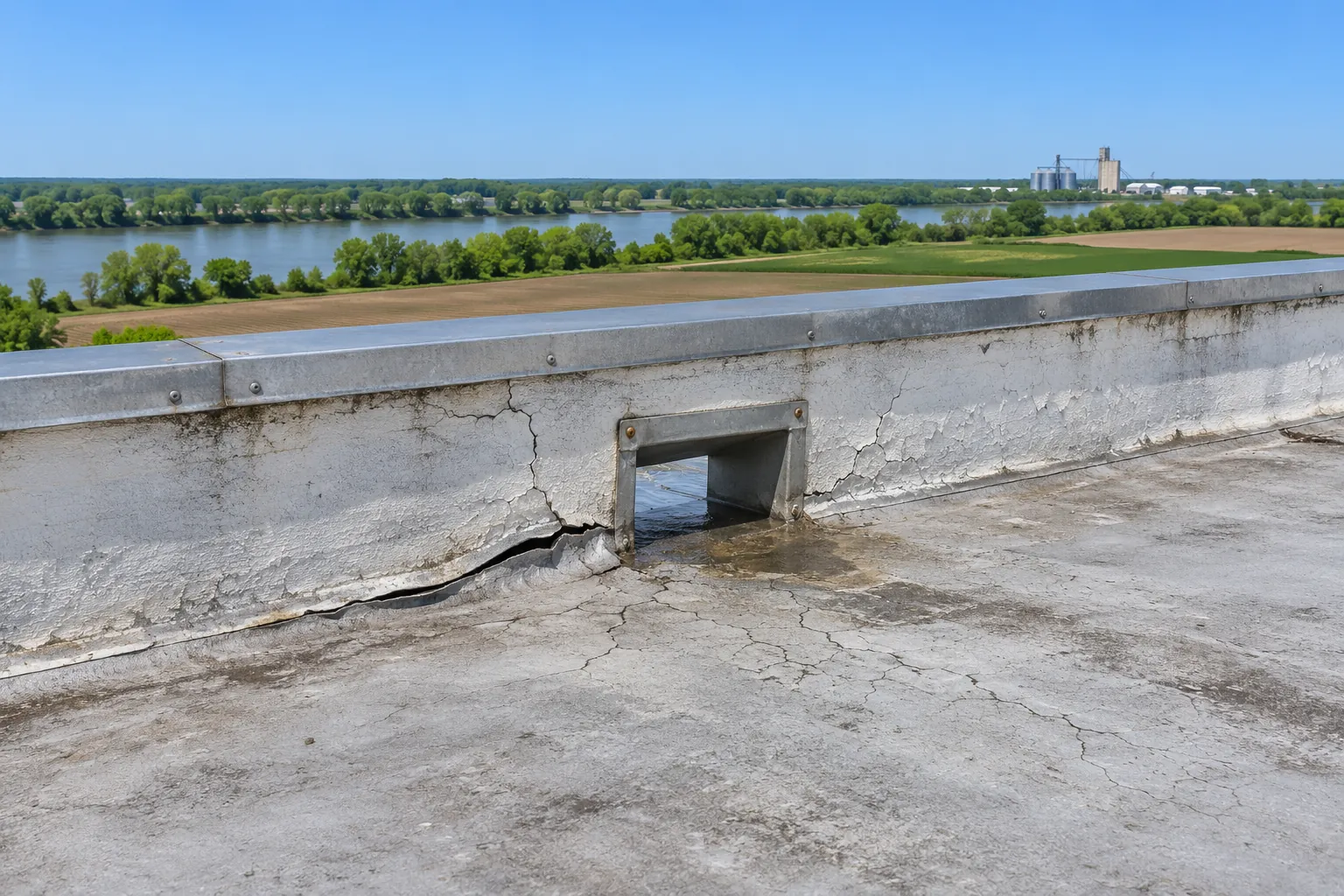
Most plant roofs are low-slope membrane, so seam, blister, and ponding repairs run alongside equipment work.
Flat roof repair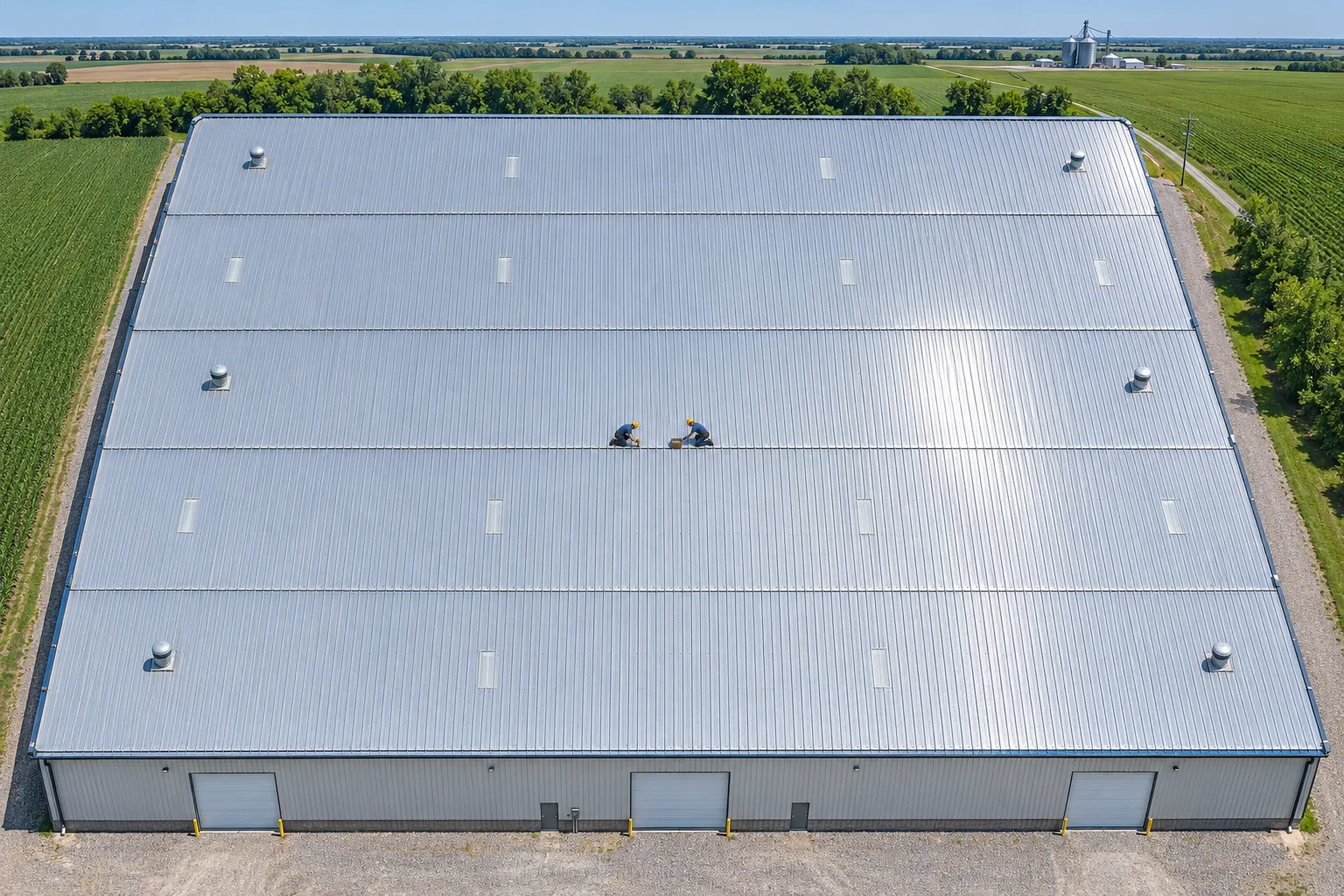
Warehouses and shops beside the plant often carry metal panel roofs with screws and laps to tighten.
Metal roof repair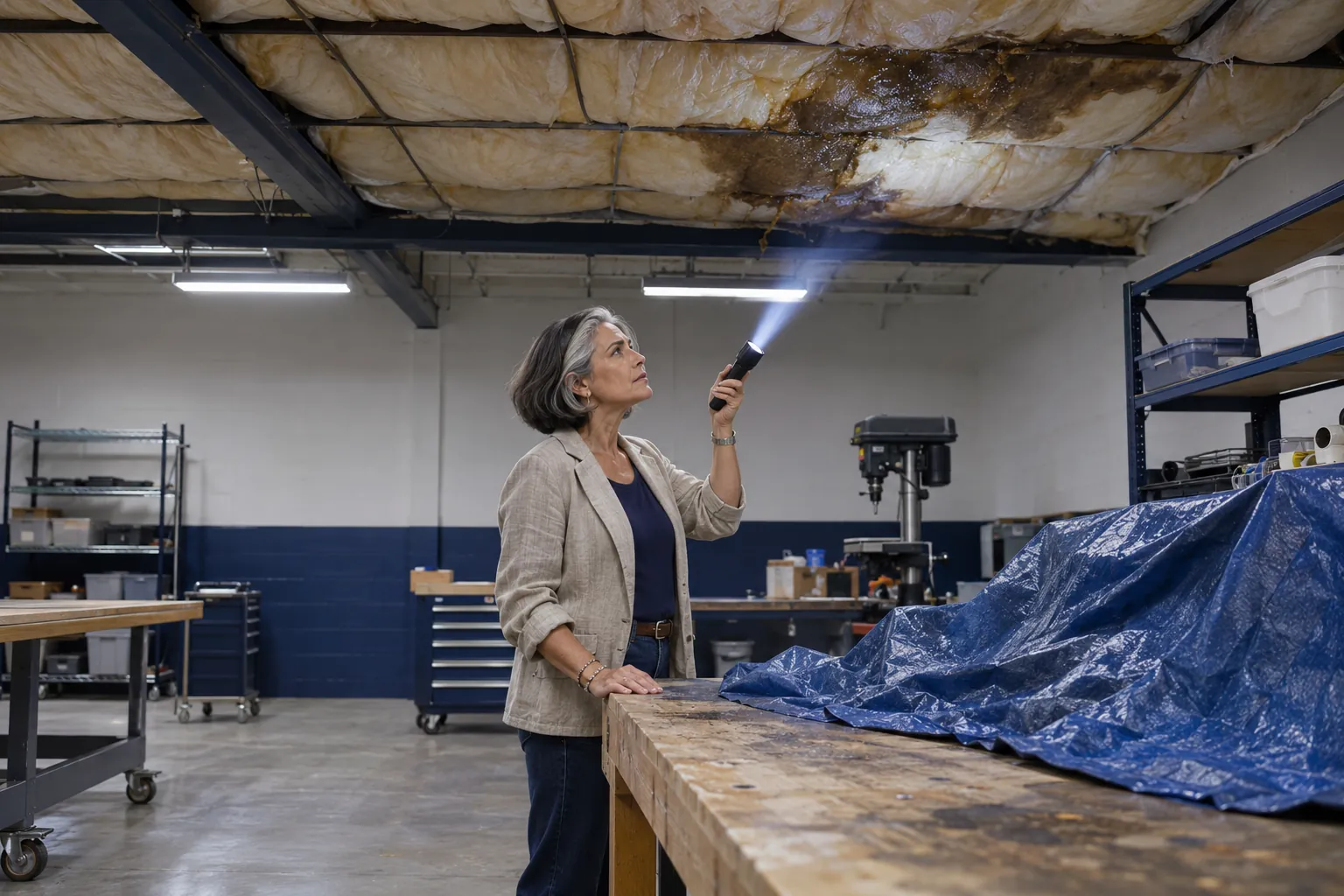
Drips over equipment get traced to the exact detail before any membrane near process vents is opened.
Roof leak repairAnswers on equipment, running plants, and steel deck.
Equipment
With flashing and membrane rated for that heat and residue. Grease, oil mist, and chemical fallout break down some membranes and keep patches from bonding, so residue is cleaned with an approved cleaner, swollen sheet is cut out, PVC goes in near grease fans, containment boxes go under exhaust fans, and hot stacks get high-temperature collars.
They work around running equipment, plant safety rules, and surfaces exposed to heat, grease, dust, or chemicals. Lockouts for fans and vents, residue that blocks adhesion, heavy rooftop equipment, and restricted access all shape the job. A leak over a production line or electrical room carries more risk than one over storage.
Operations
Yes, most repairs happen while the plant runs. Intakes near the work are shut down or covered during adhesive work, low-odor products are used where available, hot work near stacks gets a permit and fire watch, interior protection goes under deck openings, and larger deck repairs are phased by bay.
Twice a year and after major storms, since equipment, residue, and foot traffic speed wear. Spring and fall checks cover drains and scuppers, seams and flashing, walkway pads, residue near exhaust fans, pipe supports on their pads, and screws and laps on metal sections. Logging findings by roof area helps plan repairs into shutdowns.
Deck
It turns up during leak tracing or tear-back, when rust, holes, or soft spots appear under wet insulation. Steel under long-term leaks rusts from the top first, out of sight from inside. The crew cuts back to solid edges, plates small holes, replaces sections where rust has spread, and rebuilds insulation and membrane.
Large deck replacements get an engineer's review, and the building inspector with jurisdiction can be involved when structural sections change. In Owensboro and the rest of Daviess County that office is OMPC, so we raise it before large sections are cut out.
Send the plant's roof type, the equipment near the leak, and your next shutdown dates. We will plan the visit around them.
Leave a name and number and we will call you about the leak or damage you are seeing.
Or call now: (270) 260-2459