TPO Repairs
Weathered sheet is cleaned with a membrane cleaner, then a heat-welded TPO patch goes on, reaching past the damage on every side. Old TPO that refuses a weld gets a cover strip.

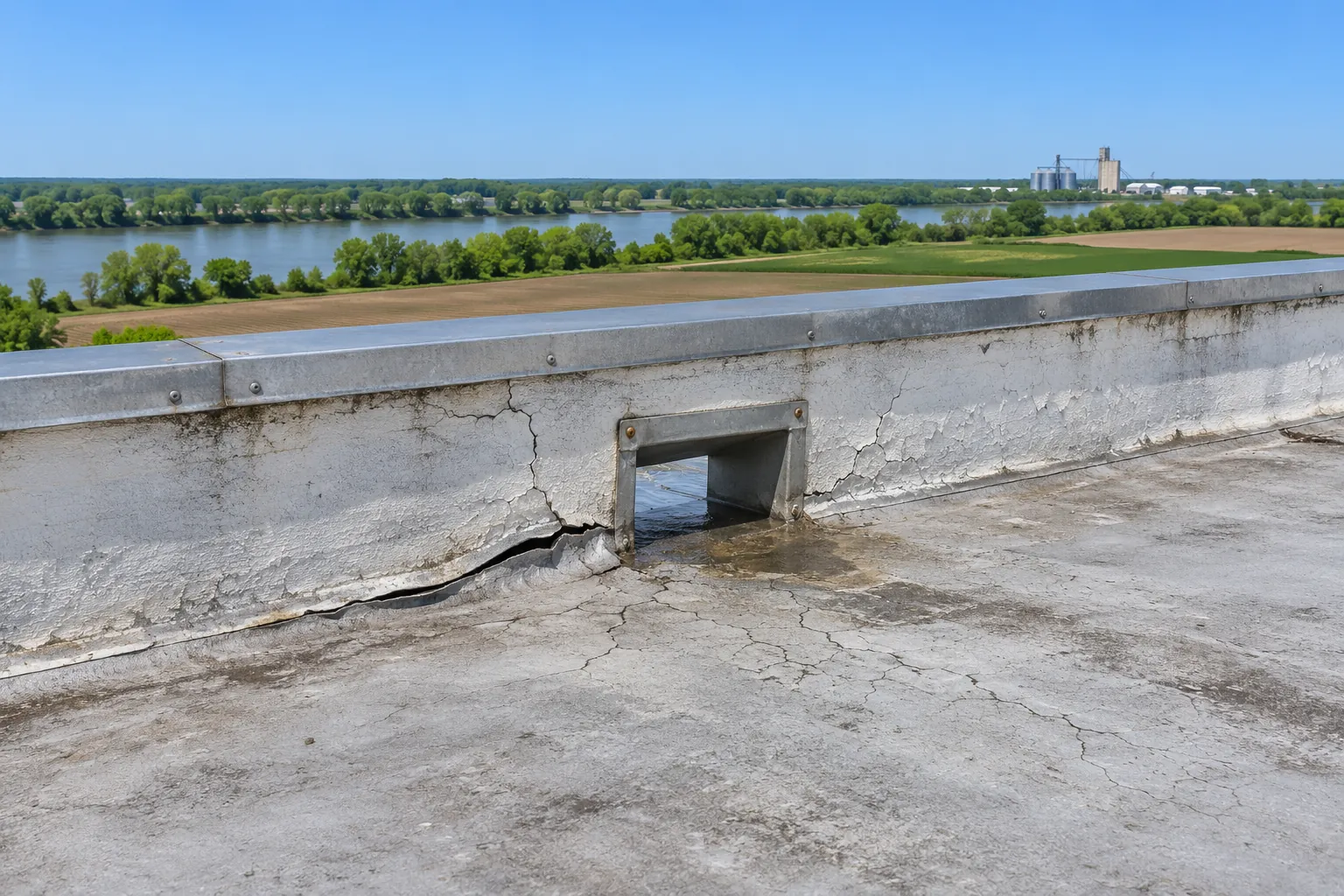
As an Owensboro flat roof repair contractor, we find and fix open seams, blisters, splits, ponding, and wet insulation on TPO, EPDM, modified bitumen, and built-up roofs.
Lifted laps welded, taped, or stripped with matching membrane.
Compare all repair typesDrains cleared, sumps lowered, and crickets set in low spots.
Read flat roof questionsSoaked boards cut out and replaced before the patch goes on.
Trace an active leakAn Owensboro flat roof repair contractor starts by sorting what a patch can fix from what needs a bigger plan. This table shows where that line falls.
| Condition | Repair Fits | Plan For More |
|---|---|---|
| Seams | A few open laps or T-joints | Seams failing across the whole field |
| Insulation | Dry, or a small wet area cut out | Wet readings across several bays |
| Ponding | A clogged drain or one low spot | Deck sag across a wide area |
| Blisters and splits | Isolated, with bonded membrane around them | Clusters across the field or repeat splits on deck joints |
| Old TPO | Takes a weld after cleaning | Resists welding and needs cover strips or a larger section |
Flat roofs give warning signs in three places before a small leak turns into wet insulation.
Sheeting water over a scupper box means the drain line behind it is blocked or too small.
Edge metal lifted by wind leaves the membrane edge open along the parapet.
Water travels under single-ply sheets and along deck flutes, so drips land well away from the opening.
An area that stays colder than the rest in winter can sit under soaked insulation.
A probe slides under laps that have lost their bond, most often at T-joints.
Dirt rings mark water that sat for days, which speeds seam wear and adds weight.
Raised bubbles show trapped air or moisture, while straight splits tend to follow deck joints.
Each membrane takes its own repair method. Mixing materials is what makes patches fail, so the membrane type is confirmed with a small cut first.
Weathered sheet is cleaned with a membrane cleaner, then a heat-welded TPO patch goes on, reaching past the damage on every side. Old TPO that refuses a weld gets a cover strip.
Rubber is scrubbed and primed before seam tape or an EPDM patch is rolled in. Shrinkage pulling the sheet away from walls is fixed with new base flashing.
Loose granules are removed, then a torch-down or cold-applied patch is set over the lap or blister so it sheds water downslope.
Gravel is pushed back, blisters are cut and dried, and felt layers with asphalt or cold-process material rebuild the spot before the gravel returns.
Fixing a flat roof at the seam keeps the rest of the system working for everyone who uses the building.
Call with the spots where water sits after rain and where it shows up inside. Clearing a drain is often the first fix.
Five steps, from the first probe of a seam to a dry, sealed patch at the end.
We check seams, laps, and flashing edges upslope of the stain, then take moisture readings across the suspect area to see how far water has spread.

A small cut tells the crew whether the roof is TPO, EPDM, modified bitumen, or built-up, so the right patch material is ordered.
Damaged membrane is cut back and soaked insulation comes out. New boards and cover board go in at the same height as the old.
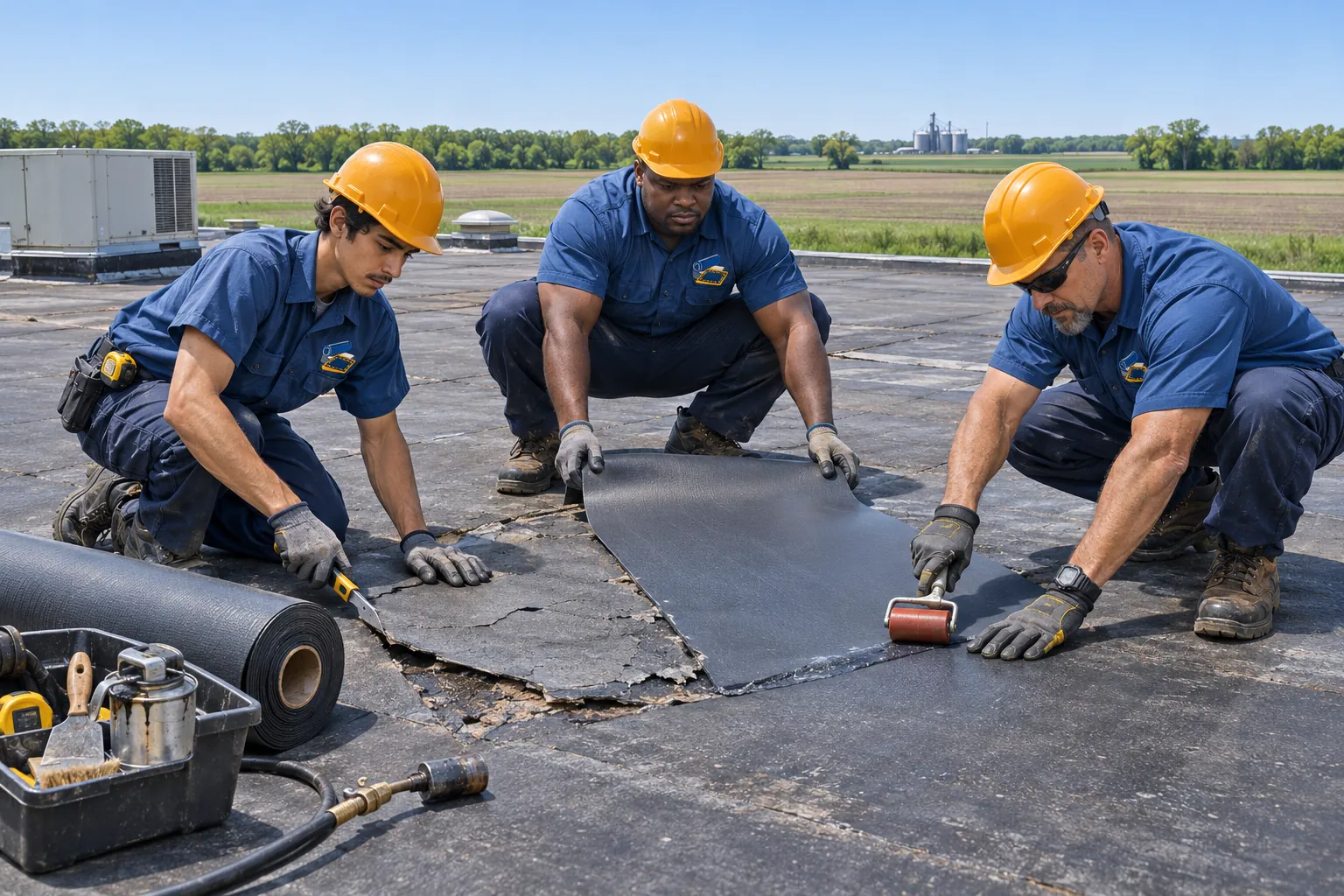
Heat welds, primed tape, or torch-down cap sheet close the opening, with the patch running past the damage on all sides.
Drains are cleared and low spots marked. If water returns to the same place after rain, crickets or a lowered drain ring come next.
Flat roof leaks often tie into other repair work on the same building.
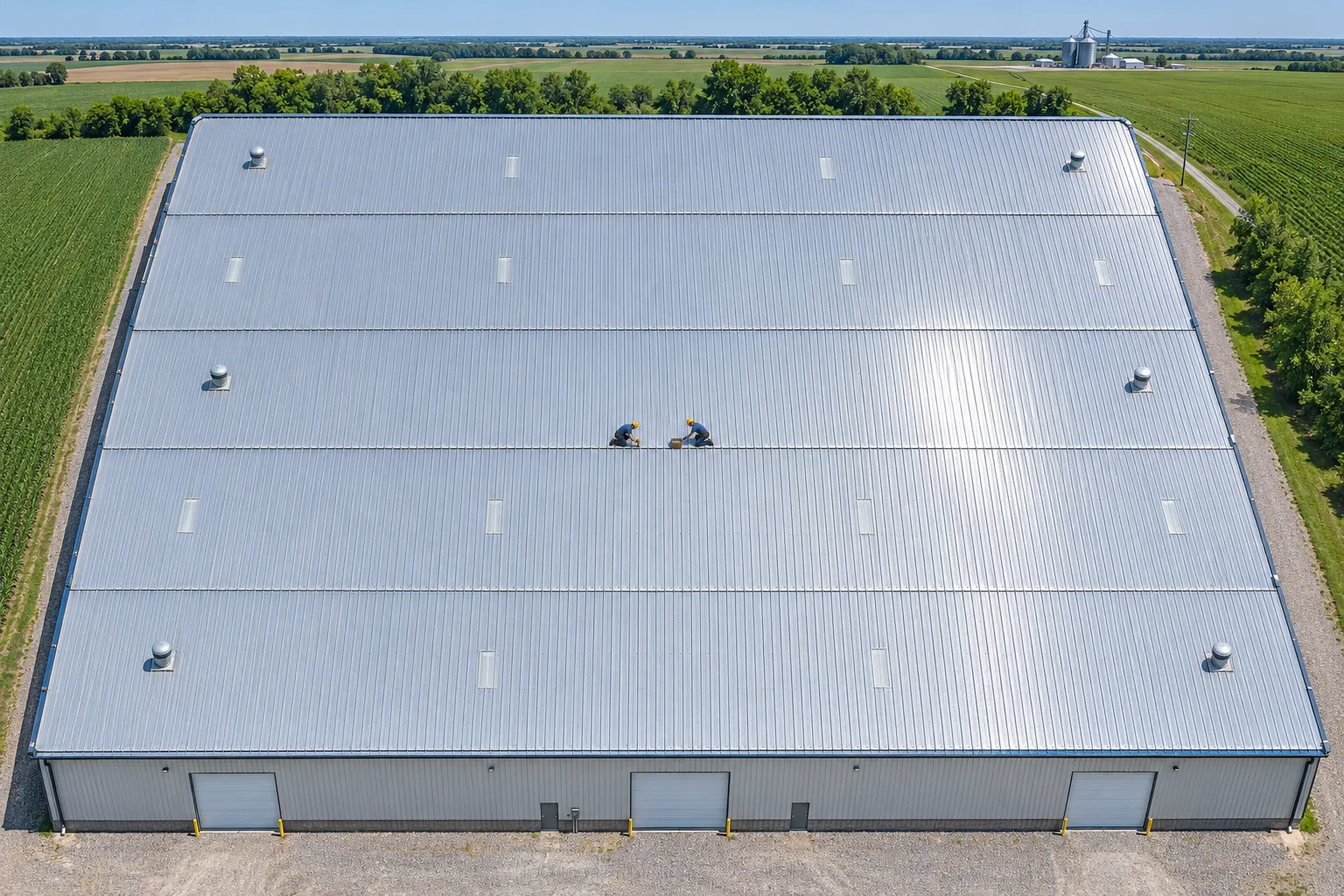
Mixed buildings with a metal panel addition need fastener and end lap repairs alongside the membrane work.
Metal roof repair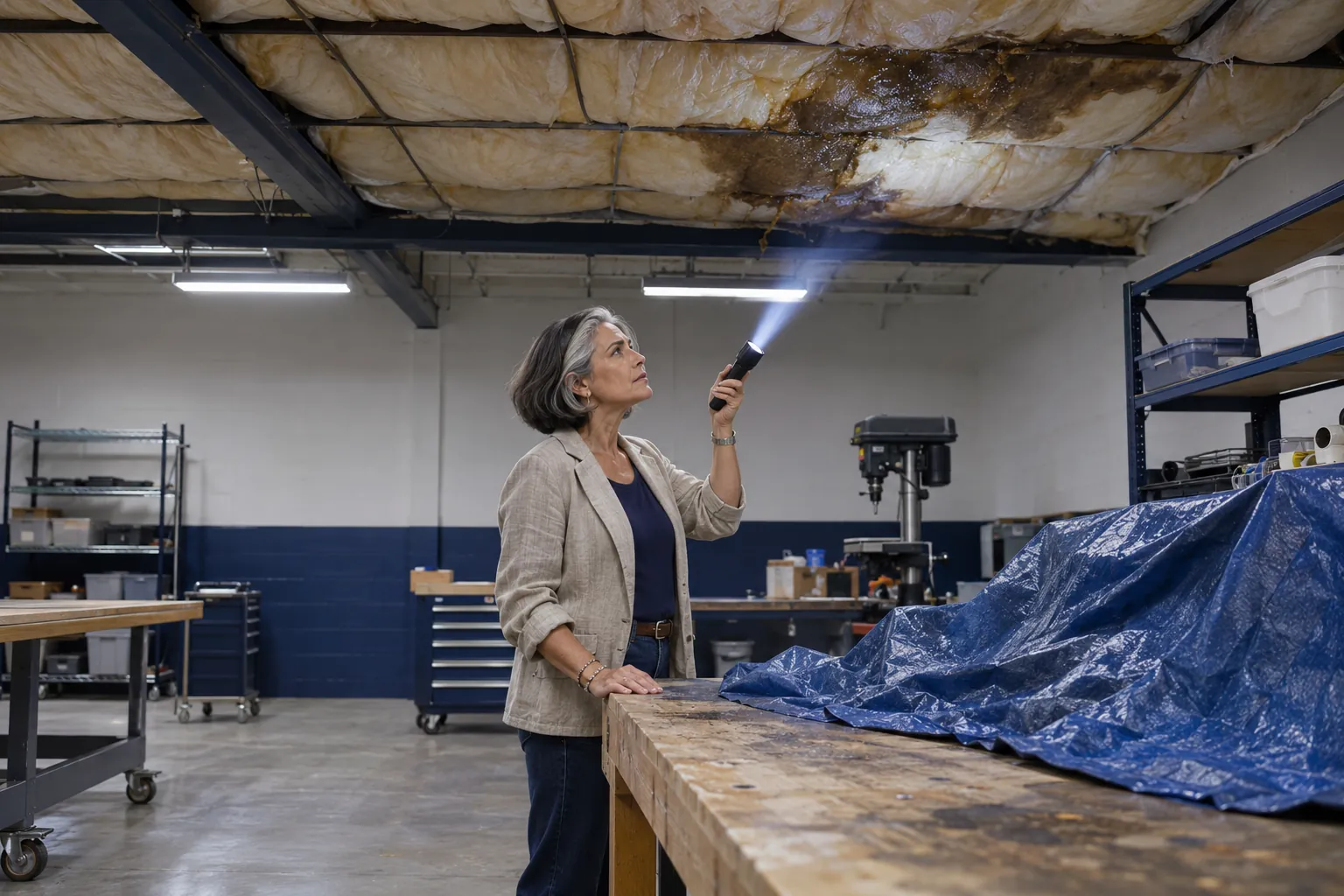
When a stain inside lines up with no visible seam, leak tracing finds the true entry point first.
Roof leak repair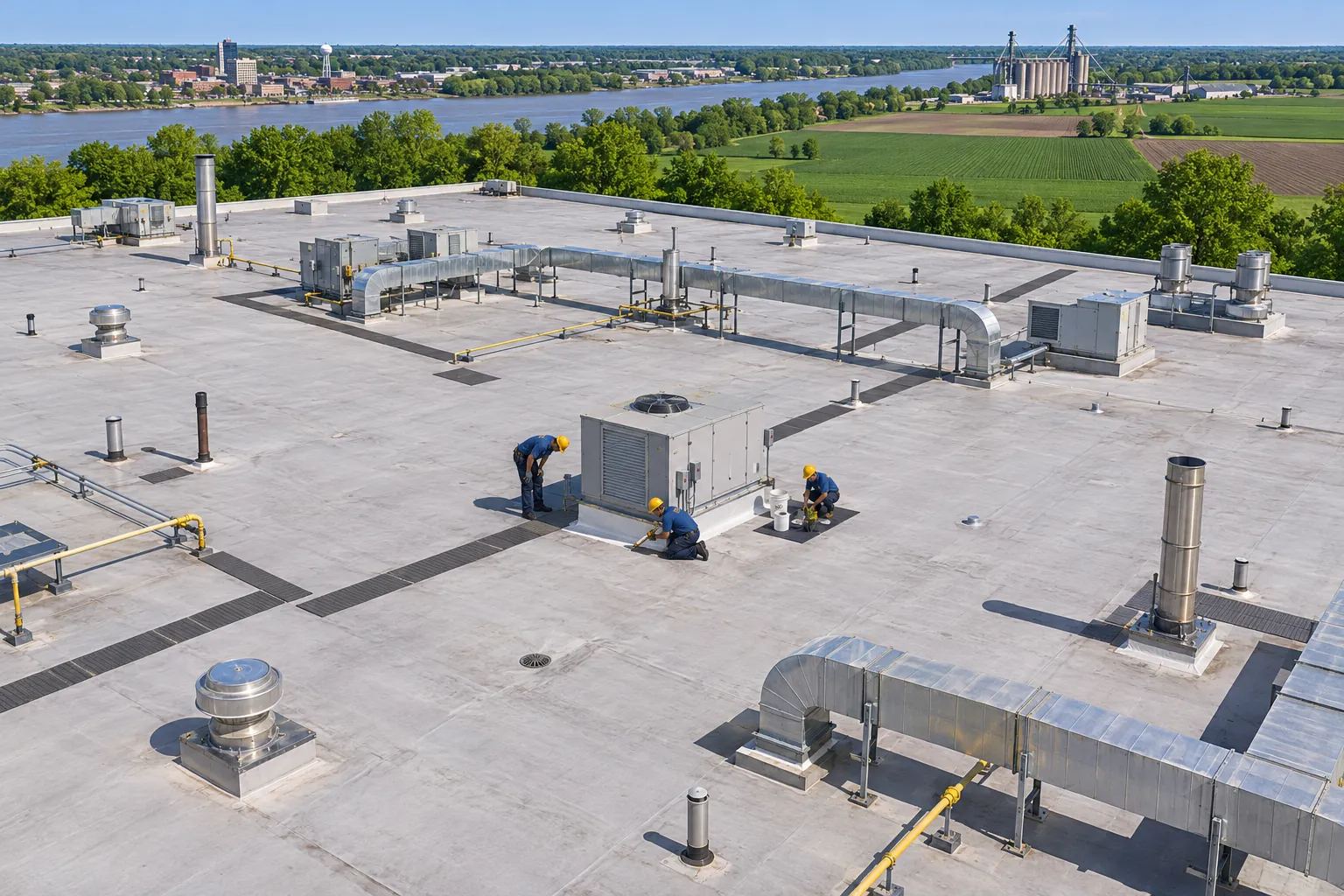
Plant roofs with exhaust fans and grease residue need membrane chosen for that exposure before any patch.
Industrial roof repairAnswers on finding, patching, and drying out flat commercial roofs.
Finding Leaks
Work starts at the interior stain and moves up to the roof, checking every seam, flashing, and penetration upslope of that spot. Probing laps, moisture meter readings, and water tests on one detail at a time narrow it down, since water travels under membranes and along deck flutes.
Sagging deck, clogged drains, crushed insulation, or drains set higher than the roof around them. Clearing strainers, lowering drain rings with a new sump, adding tapered crickets, replacing crushed boards under walkways, or adding a drain at a chronic low point all reduce it. Deck sag over a wide area is structural work.
Membranes
TPO takes a heat-welded patch after cleaning, EPDM takes primer with seam tape or an EPDM patch, and modified bitumen takes a torch-down or cold-applied patch once loose granules are gone. Built-up roofs get felt and asphalt or cold-process layers. Mixing materials is what makes patches fail.
Yes, when the membrane around them is still bonded and the insulation below is dry. A blister is cut open in an X, dried, checked underneath, then re-adhered or trimmed and covered with matching material. Splits get cleaned and sealed with a reinforced strip. Repeat splits along deck joints show movement that needs its own fix.
Insulation
It comes out. Soaked boards hold water against the deck and stop insulating, so the crew marks the wet area with readings, cuts the membrane, removes the boards, checks the steel deck for rust, installs new insulation and cover board, and seals the opening. Large wet areas raise the replacement question.
The permanent patch does. Welds, primers, and adhesives need a clean, dry surface to bond. During rain the crew can set a temporary patch to stop water, then marks it and removes it once the roof dries, so mastic never sits under the finished weld.
Send the roof type if you know it and where water collects after rain. We will plan the visit around those spots.
Leave a name and number and we will call you about the leak or damage you are seeing.
Or call now: (270) 260-2459