Curb And Unit Flashing
Failed flashing is stripped, curb corners get new welded or taped membrane, base flashing goes to full height, and cap metal is refastened over it. Short curbs are raised where flashing height falls short.


As an Owensboro commercial roof leak repair contractor, we trace water from the stain inside to the seam, curb, pitch pan, or drain letting it in, and fix it.
Corner flashing rebuilt at rooftop units, fans, and skylights.
Compare all repair typesShrunken filler refilled, or pans swapped for fitted boots.
Plant roof repairsTemporary patches during weather, permanent fixes once the roof is dry.
Storm leak answersAn Owensboro commercial roof leak repair contractor sorts each leak by how far the water has traveled. Short paths mean small repairs, and long ones mean wet material to replace.
| Finding | Repair Fits | Plan For More |
|---|---|---|
| Entry point | One seam, curb, pipe, or drain | Leaks at many details across the roof |
| Water path | A short run to the stain | Water spread through insulation over several bays |
| Repeat leaks | First repair at this spot | The same spot failing again within a season |
| Deck | Solid steel or wood at the opening | Rust holes or soft deck under the leak |
| Timing | Leaks in heavy rain only | Leaks in light rain at many points |
Leaks leave a trail. Each clue below points tracing toward a smaller part of the roof.
A downspout that stays dry in a storm means water is backing up on the roof.
Wall flashing hanging loose at the top lets water run behind the membrane.
Moving drips that follow wind direction point to a wall termination or end lap on the windward side.
Water inside a fixture means power to that circuit should be shut off right away.
Dated photos of each stain show whether a leak is growing or holding steady.
Corners where the unit's cap overlaps the flashing open first on every roof type.
Filler pulling away from a gas line or support leg leaves a ring for water to enter.
Once the entry point is found, the fix matches the detail that failed and the membrane around it.
Failed flashing is stripped, curb corners get new welded or taped membrane, base flashing goes to full height, and cap metal is refastened over it. Short curbs are raised where flashing height falls short.
Pans with shrunken filler are cleaned and refilled with pourable sealer. Rusted or bent pans become new pans or fitted boots, and loose storm collars are reset and sealed.
Frames are resealed and cracked lenses replaced. Condensate lines that drip onto seams are rerouted so water drains off the membrane.
Strainers are cleared, broken drain clamping rings replaced, and scupper liners resealed so water leaves the roof instead of backing up under laps.
Fixing a leak at the source protects more than the ceiling tile under it.
Move what you can away from the drip, set a bucket, and photograph the stain. Then call us, and the crew goes up once it is safe.
Tracing comes before patching. These steps keep the search narrow and the repair in the right place.
We start inside at the stain, note the last rain and wind direction, then walk the roof directly over that spot and check every joint upslope.

Distances from the nearest wall or column inside are carried up to the roof, so the search begins over the right bay.
Testing starts at the lowest suspect detail and moves uphill, one flashing or seam at a time, until water shows up inside again.
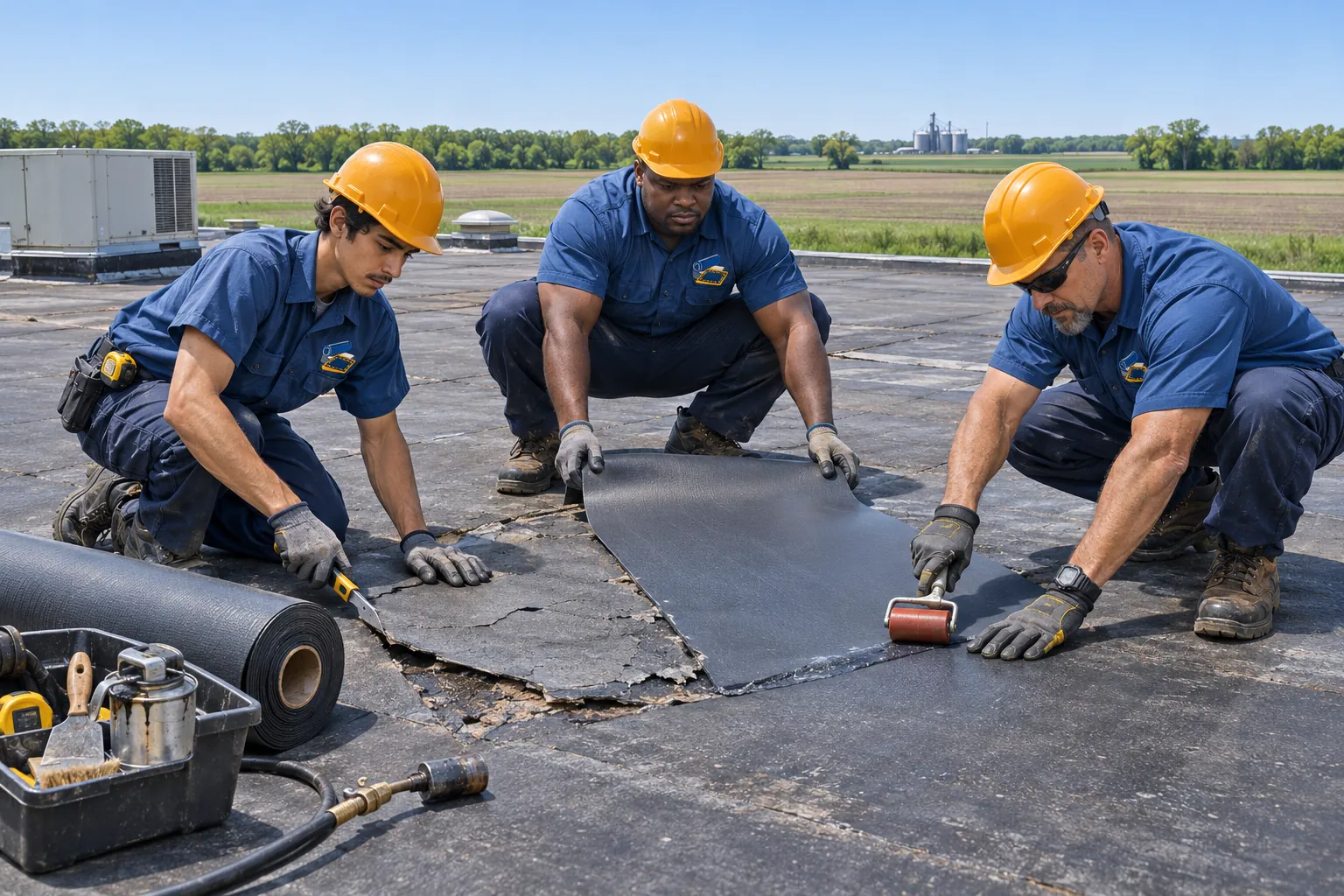
If tests find nothing, the roof is opened at the suspect spot. The failed detail is rebuilt with matching material and wet insulation is replaced.
Photos, the entry point, and the weather that caused it go into the repair record, which narrows any future search.
The entry point decides which repair comes next on the roof.
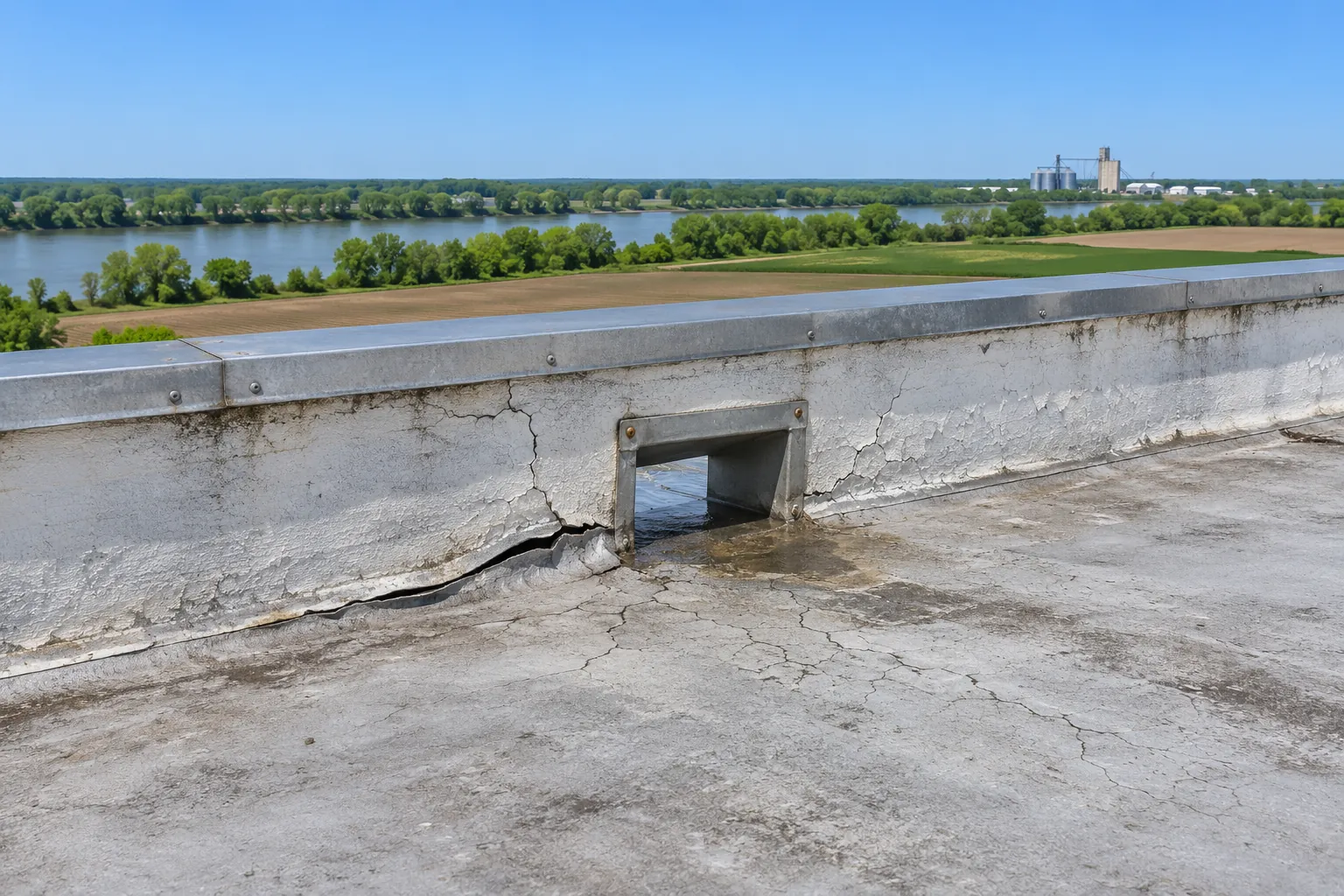
Ponding beside a drain often explains a leak at the nearest lap, and flat roof repair fixes both.
Flat roof repair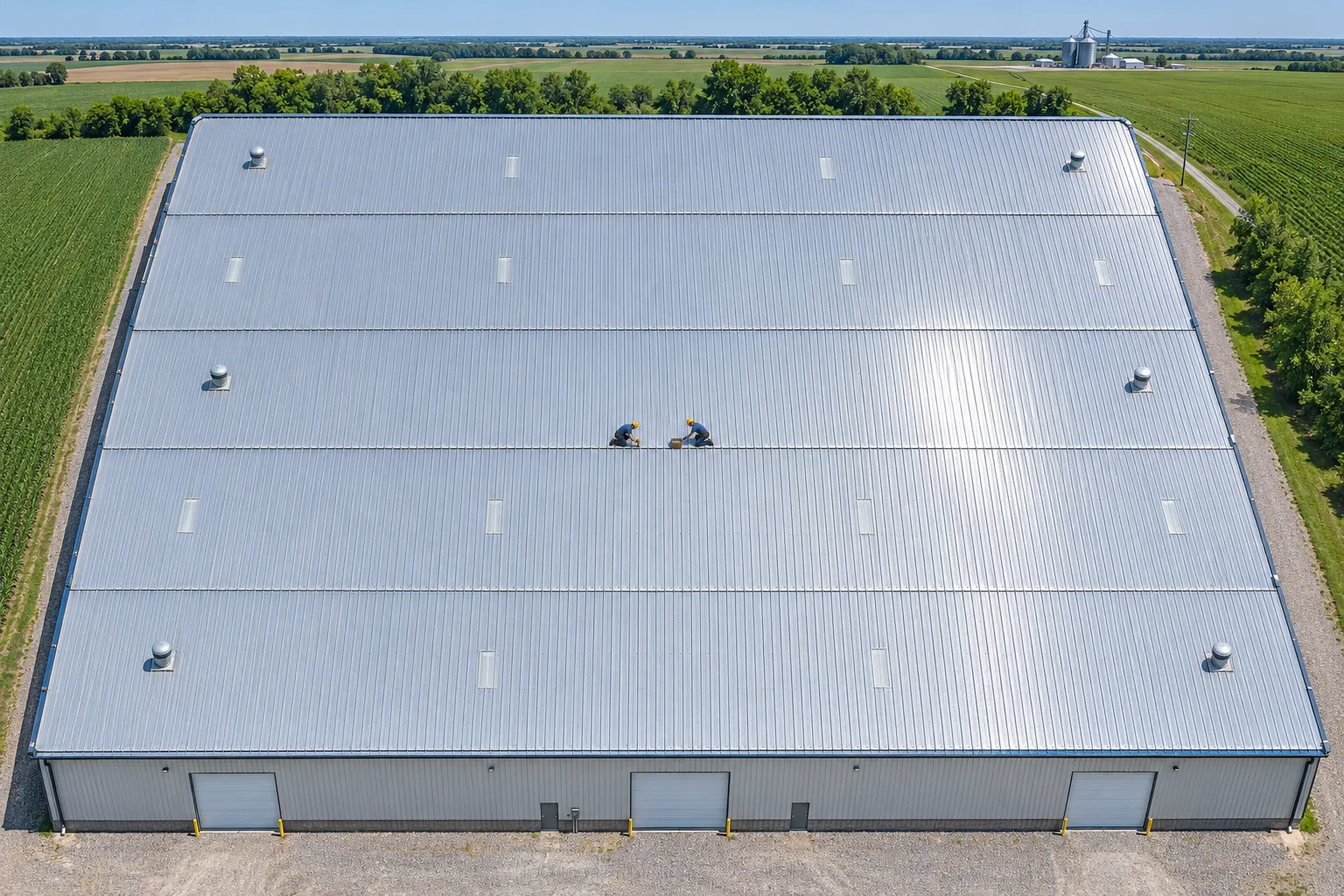
Backed-out screws on panel roofs cause leaks that track along purlins far from the hole.
Metal roof repair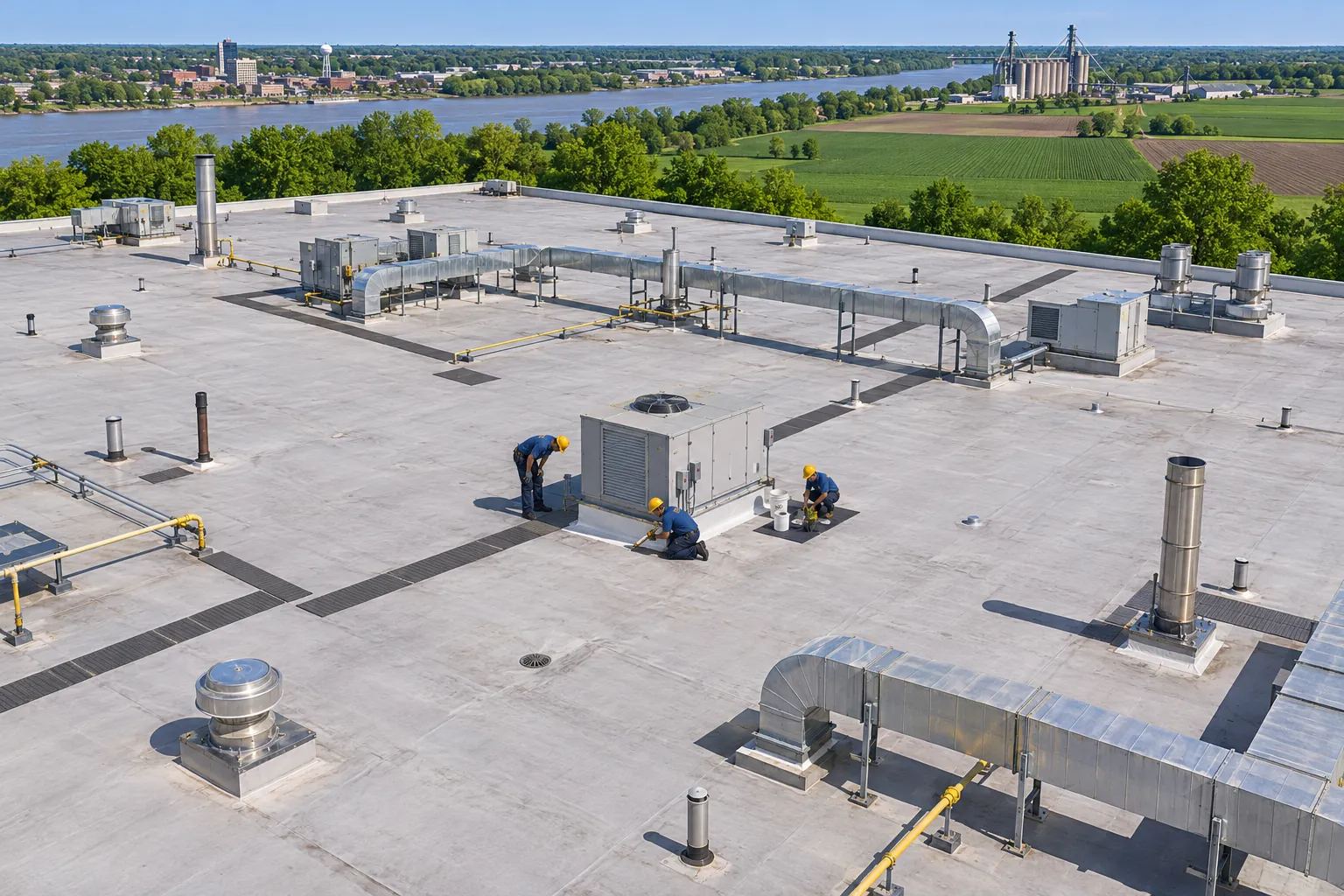
Leaks over production lines and electrical rooms get scheduled with plant maintenance and the safety office.
Industrial roof repairHow leaks get traced, where they start, and what to do while water is coming in.
Tracing
From the interior stain upslope on the roof, checking every joint and penetration until the entry point turns up. The crew marks the drip and last rain, measures from a wall or column to the same spot above, then water tests one detail at a time, opening the roof only if testing finds nothing.
TPO and PVC leak at seams, T-joints, curb corners, and wall terminations. EPDM leaks at seam tape edges, pipe boots, and where shrinkage pulls at walls. Modified bitumen fails at laps, blisters, and base flashing, built-up roofs at blisters, splits, pitch pans, and gravel stops, and metal at screws, end laps, ridge caps, and gutters.
Details
Most curb leaks start at the corners or where the unit's metal cap overlaps the flashing. The repair strips the old flashing, welds or tapes new corners, runs base flashing to full height, and refastens the cap. Skylights get resealed frames, and cracked lenses are replaced.
Yes. Sealant in pitch pans shrinks, cracks, and pulls away from the pipe or pan wall, especially around gas lines and support legs on older roofs. Shrunken filler is cleaned out and refilled, rusted pans are replaced or converted to prefabricated boots, cracked boots are matched to the membrane, and loose storm collars are reset.
During A Storm
Protect the interior and log the leak. Move inventory and equipment, set buckets or tarps, mark the ceiling spot, photograph the stain with the time and wind direction, and shut off power to any wet fixture. A temporary patch goes on once it is safe to go up, and the permanent repair follows when the roof dries.
Only for now. Roof cement, peel-and-stick tape, or a tarp can stop active water, but crews stay off wet, wind-swept roofs during lightning and high wind. The permanent repair needs a clean, dry surface, so it waits until the rain passes.
Tell us where the stain is, when it shows up, and what the roof is made of. Those three details start the trace.
Leave a name and number and we will call you about the leak or damage you are seeing.
Or call now: (270) 260-2459